The Nano S Plus configuration process establishes cold storage security through proper initialization, PIN creation, and recovery phrase backup. Understanding model-specific setup requirements ensures successful Ledger device activation without complications.
The Nano S Plus provides USB-C connectivity for desktop and compatible mobile device pairing with Ledger Live applications. This model supports installation of approximately 100 cryptocurrency applications simultaneously, accommodating diverse portfolio requirements. The setup process typically completes within 20-30 minutes including firmware updates and initial account creation for crypto security.
Proper configuration requires private environment, dedicated attention, and physical recording materials for recovery phrase documentation. Rushing setup increases error likelihood that could compromise private keys protection or create recovery difficulties across all supported coins.
Device Activation Process
Device Activation Process initiates the Nano S Plus hardware wallet for first use through physical controls and software pairing. The power on procedure confirms device functionality while pairing with Ledger Live establishes the management interface connection. Proper activation sequence ensures all security components initialize correctly for cold wallet operation.
Activation should occur with Ledger Live already installed on the computer to streamline the setup workflow. The device powers through USB-C connection without requiring separate charging.
Power On Procedure
Power on procedure for Nano S Plus activation:
| Step | Action | Device Response |
|---|---|---|
| 1 | Connect USB-C cable | Ledger logo appears |
| 2 | Wait for boot complete | Welcome message displays |
| 3 | Press both buttons | Setup options appear |
| 4 | Select "Set up as new device" | PIN setup begins |
| 5 | Choose PIN length | Digit entry starts |
| 6 | Enter PIN digits | Each digit confirms |
| 7 | Confirm PIN | Phrase setup begins |
| 8 | Record recovery phrase | 24 words display |
Power on procedure guides users through Ledger hardware wallet setup with clear on-screen instructions. The two-button navigation controls all device interactions for secure element operation.
Pairing with Ledger Live
Pairing with Ledger Live connection process:
- Launch Ledger Live on desktop computer
- Select "Get Started" from welcome screen
- Choose "Ledger Nano S Plus" as device model
- Select "Set up as new device" option
- Follow on-screen guidance through setup
- Complete PIN configuration on device
- Record recovery phrase as prompted
- Verify phrase through confirmation check
- Ledger Live performs genuine check
- Pairing completes with green confirmation
Pairing with Ledger Live establishes the management connection for Nano S Plus configuration. The application guides users through each Ledger device activation step with visual instructions via USB-C connection.
Secure Recovery Phrase
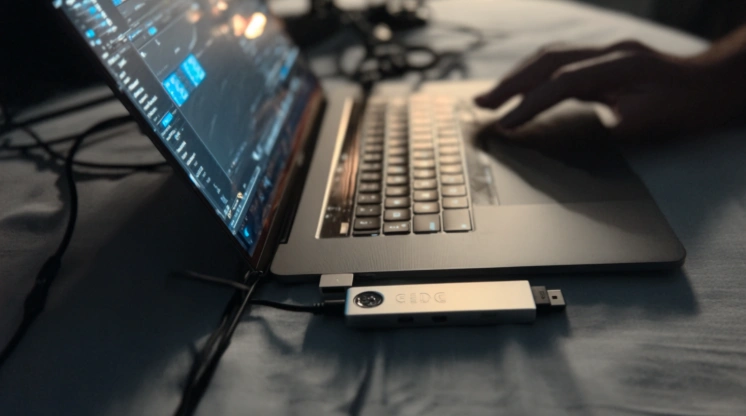
Secure Recovery Phrase creation and protection represents the most critical element of Ledger hardware wallet setup. The phrase writing technique ensures accurate recording while offline storage best practices protect against theft and loss. Recovery phrase security determines whether cryptocurrency remains accessible throughout ownership.
The 24-word phrase provides complete wallet reconstruction capability on any compatible device. This power requires corresponding protection against unauthorized access for private keys security.
Phrase Writing Technique
Phrase writing technique for accurate recording:
- Use provided recovery cards only
- Write clearly in permanent ink
- Record exact word spelling precisely
- Maintain word sequence order carefully
- Use numbered positions (1-24)
- Double-check each word before proceeding
- Verify against device display
- Store cards face-down when not recording
- Never photograph or type words
Phrase writing technique prevents transcription errors that could prevent recovery. Each word must match exactly for successful cold storage restoration unlike Trezor or KeepKey phrase formats.
Offline Storage Best Practices
| Practice | Purpose | Implementation |
|---|---|---|
| Physical only | Prevent digital exposure | Paper or metal backup |
| Private location | Prevent discovery | Safe, hidden storage |
| Fire protection | Survive disasters | Metal backup or fireproof safe |
| Water protection | Survive flooding | Sealed container or metal |
| Multiple copies | Redundancy | Geographic distribution |
| Access limitation | Prevent theft | Trusted parties only |
Offline storage best practices protect Nano S Plus configuration backup across potential threat scenarios. The recovery phrase enables Ledger device activation on replacement hardware when needed for crypto security.
Firmware Installation
Firmware Installation ensures the Nano S Plus operates with current security patches and feature updates. The verify signature process confirms update authenticity while the official update process maintains device integrity. Firmware currency provides optimal protection for cryptocurrency holdings.
Installation typically occurs during initial setup when Ledger Live detects outdated firmware. Regular updates throughout device lifetime maintain crypto security standards.
Verify Signature
Verify signature protection for firmware updates:
- All firmware cryptographically signed by Ledger
- Secure element validates signature before installation
- Invalid signatures rejected automatically
- Genuine check confirms post-update integrity
- Rollback protection prevents downgrade attacks
- Signature verification requires no user action
- Failed verification prevents firmware execution
- Only authentic Ledger code runs on device
Verify signature mechanisms ensure Ledger hardware wallet setup uses only authorized firmware. The secure element enforces signature requirements preventing malicious code installation for all supported coins via USB-C.
Official Update Process
- Ledger Live notifies of available update
- Review update notes in application
- Ensure USB-C connection is stable
- Click "Download update" button
- Device displays update confirmation
- Press both buttons to approve
- Update downloads to device
- Installation progress displays
- Device restarts automatically
- Genuine check confirms success
Official update process maintains Nano S Plus configuration security through verified firmware. Updates address vulnerabilities discovered after manufacturing for cold wallet protection.
Initial Account Setup
Initial Account Setup creates cryptocurrency accounts within Ledger Live for receiving and managing digital assets. The add Bitcoin account process establishes BTC management capability while add Ethereum account enables ETH and token operations. Account setup prepares the hardware wallet for actual cryptocurrency usage.
Multiple accounts can be created for organizational purposes. Each blockchain network requires its own application installed on the device for private keys management.
Add Bitcoin Account
| Step | Location | Action |
|---|---|---|
| 1 | Ledger Live | Click "Add Account" |
| 2 | Account selection | Choose "Bitcoin" |
| 3 | Device prompt | Open Bitcoin app |
| 4 | On device | Navigate to Bitcoin app |
| 5 | Press buttons | App launches |
| 6 | Ledger Live | Account discovered |
| 7 | Account naming | Enter custom name |
| 8 | Confirmation | Click "Add Account" |
Add Bitcoin account establishes BTC management within Ledger hardware wallet setup. The account derives from recovery phrase enabling restoration on compatible devices for cold storage.
Add Ethereum Account
Add Ethereum account and token management:
- Follow similar process to Bitcoin account
- Select "Ethereum" from account list
- Open Ethereum app on device when prompted
- Account creation discovers ETH addresses
- ERC-20 tokens automatically visible
- NFT support included with Ethereum account
- Layer 2 networks require separate accounts
- Multiple Ethereum accounts possible
Add Ethereum account enables ETH and token management through Nano S Plus configuration. The same recovery phrase protects all accounts created during Ledger device activation for crypto security.
Troubleshooting Setup Issues
Troubleshooting Setup Issues addresses common problems encountered during Nano S Plus initialization. The device not recognized problem typically involves driver or connection issues while Ledger Live errors may indicate software conflicts. Understanding troubleshooting steps enables independent problem resolution.
Most setup issues resolve through basic troubleshooting without support intervention. Persistent problems may require support ticket submission for Ledger hardware wallet setup assistance.
Device Not Recognized
- Try different USB port on computer
- Test with different USB-C cable
- Restart computer and reconnect
- Check USB hub bypass (connect directly)
- Verify Ledger Live is installed
- Install udev rules (Linux systems)
- Allow security exception (macOS)
- Update USB drivers (Windows)
- Test on different computer if available
Device not recognized issues typically resolve through connection troubleshooting. Persistent problems may indicate hardware defect requiring support contact for cold wallet replacement unlike Trezor or KeepKey driver requirements.
Ledger Live Errors
| Error Type | Possible Cause | Resolution |
|---|---|---|
| Connection timeout | USB issue | Try different port/cable |
| Genuine check failed | Counterfeit device | Contact support |
| Update failed | Connection interrupted | Retry with stable connection |
| Account sync error | Network issue | Check internet, retry |
| App install failed | Storage full | Remove unused apps |
| Manager loading | Server busy | Wait and retry |
Ledger Live errors during Nano S Plus configuration usually resolve through retry or connection improvement. Genuine check failures indicate serious concerns requiring investigation for private keys security.
For initialization guide, see our How to Initialize Your Ledger Hardware Wallet page. For quick start, visit Ledger Hardware Wallet Quick Start.